
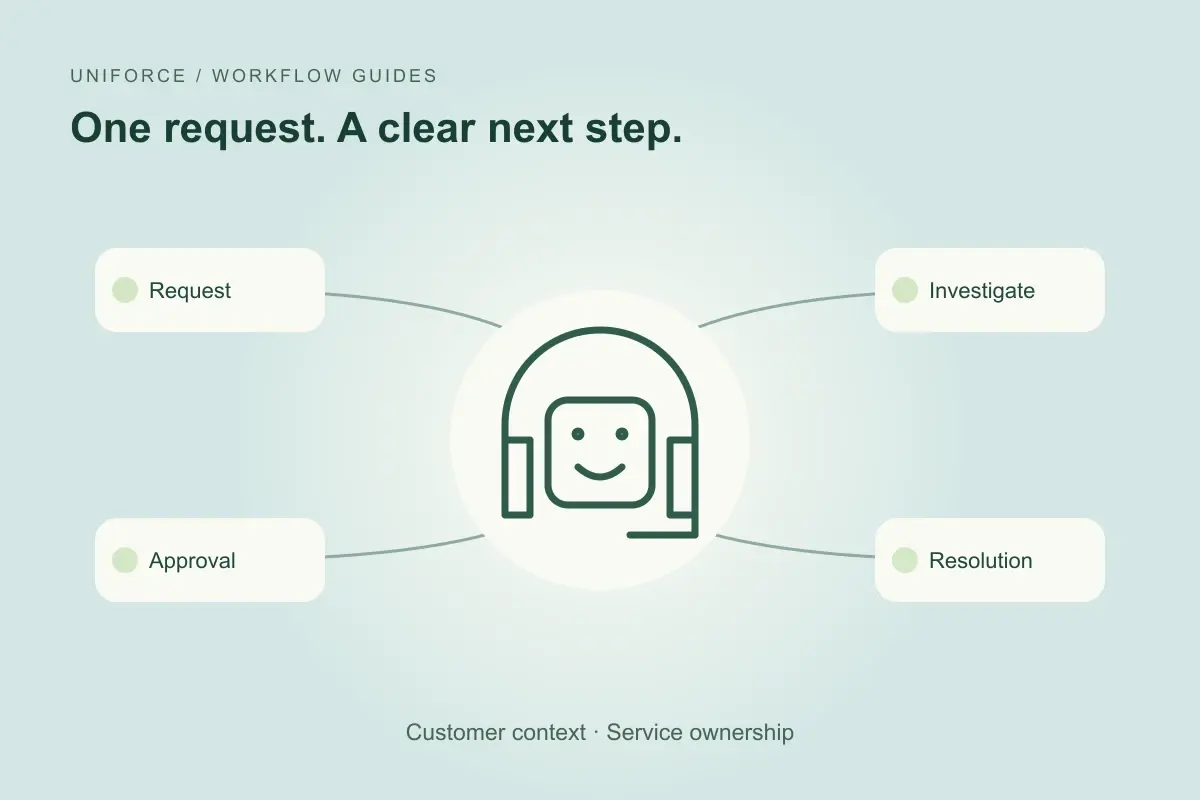
Acknowledge the problem before investigating it
A customer says an appliance has stopped working, or a parcel arrived with an item missing. Start by acknowledging the experience and identifying the record needed to help. The customer does not need a narration of internal routing, tool calls or approval queues.
Collect only the missing information. If the order reference is already in the conversation, use it rather than asking again. When a record cannot be found, state the limitation and ask a focused question. Do not promise a replacement, a visit or a refund before the applicable conditions have been checked.
Field service: prepare the job before scheduling
A service request needs enough context for the dispatcher to assign appropriate work. A digital role can organize the reported issue, location, customer availability and any approved troubleshooting already attempted. The dispatcher should see missing details and whether a technician or specialist review is required.
Booking depends on the actual scheduling connection, service area and team rules. A free calendar slot alone may not mean a suitable technician is available. Present a proposed appointment as a proposal until the authorized booking step completes, and preserve the job reference when the customer changes the time.
Retail: separate evidence collection from resolution
For a missing-item claim, gather the order record and the information required by the approved service policy. The workflow can prepare a case for the service owner without treating the customer’s statement as a reason to issue a replacement automatically.
An illustrative policy might let the role request a missing photograph but require a manager to approve an exception. The customer-facing reply should explain the information needed and the next step in plain language. It should not expose unrelated internal notes or imply that an exception has already been accepted.
Keep ownership through channel changes
A customer may call after sending an email. Link the interaction using the organization’s identification rules and show the receiving teammate what has already happened. A summary should separate verified facts, customer statements and unresolved questions.
Test a disconnected call, a failed booking and an unavailable reviewer. Assign a fallback owner and an update the team can actually deliver. Measure resolution quality, repeated questions, failed handoffs and review effort. These measures expose problems that a response-time metric alone can miss.
AI agents for contact centersKeep context with an omnichannel AI platform
Common questions
Should customers see the internal agent conversation?
The customer needs a helpful status and next step. Internal investigation, approvals and unrelated operational notes belong in the team’s workspace.
Can the workflow offer compensation?
It can prepare a proposal if that action is in scope. Issuing compensation must follow the configured policy and approval requirements.
What happens if scheduling is unavailable?
Record the request and transfer it to the scheduling owner. Explain that the appointment still needs confirmation rather than inventing a time.
About this guide
Prepared by the Uniforce editorial team. Examples illustrate proposed workflows, not customer results. The role’s access, actions and review requirements depend on the configured implementation.